Driven by curiosity. Driving change

People

Meet the current members of the Laser Analytics Group.

Group leaders

A man in a red top sits at a table and smiles towards the camera.

Career summary

  • 1995 D.Phil., Physics, University of Oxford
  • 2000 Associate Professor in Engineering Physics, Lund Institute of Technology, Sweden
  • 2001 Lecturer, Dept. of Chemical Engineering, University of Cambridge
  • 2008 Guest Professor, SAOT School of Advanced Optical Technologies, Max Planck Institute for the Science of Light, Erlangen, Germany.

Responsibilities:

Awards:

  • 1992 Legerlotz Foundation Research Prize, Switzerland
  • 1993 Keble College Research Fellowship, Oxford
  • 2004 Cyril Hinshelwood Prize
  • 2004 Gaydon Award
  • 2005 Philip Leverhulme Prize (Engineering)
  • 2008 SAOT research Prize in Optics
  • 2013 Morris Sugden Prize
  • 2014 Elected Fellow of the Optical Society of America ‘for pioneering work in the development of optical methods for quantifying the kinetics of reactions in chemical and biological systems’
  • 2023 Rosalind Franklin Medal
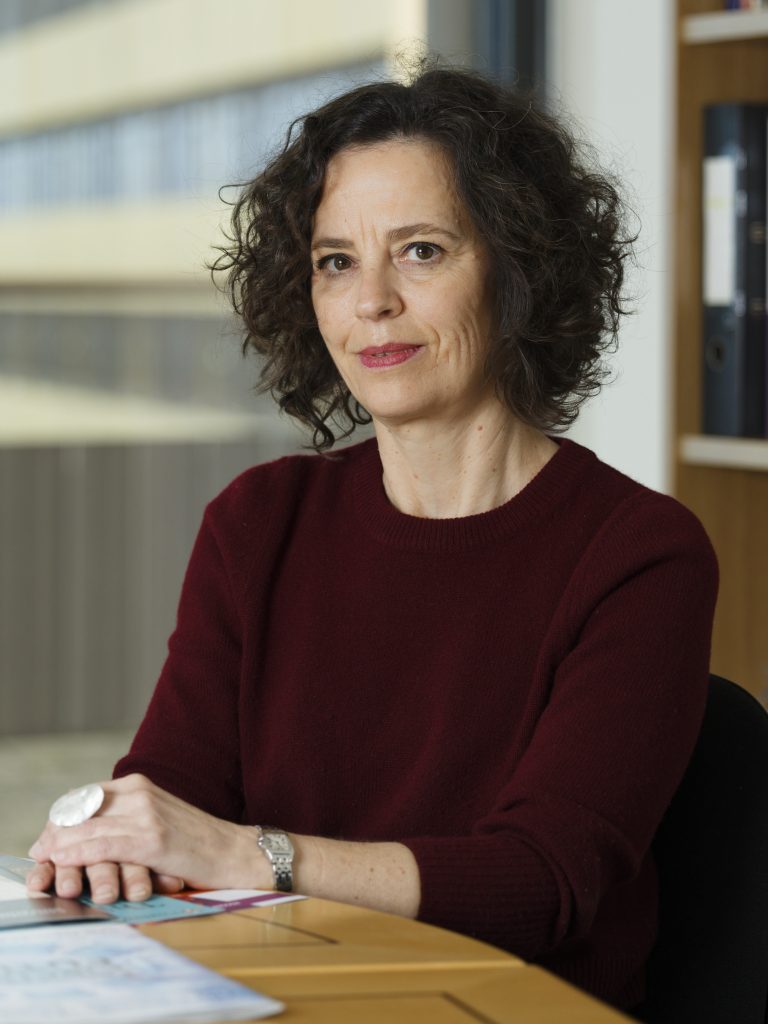
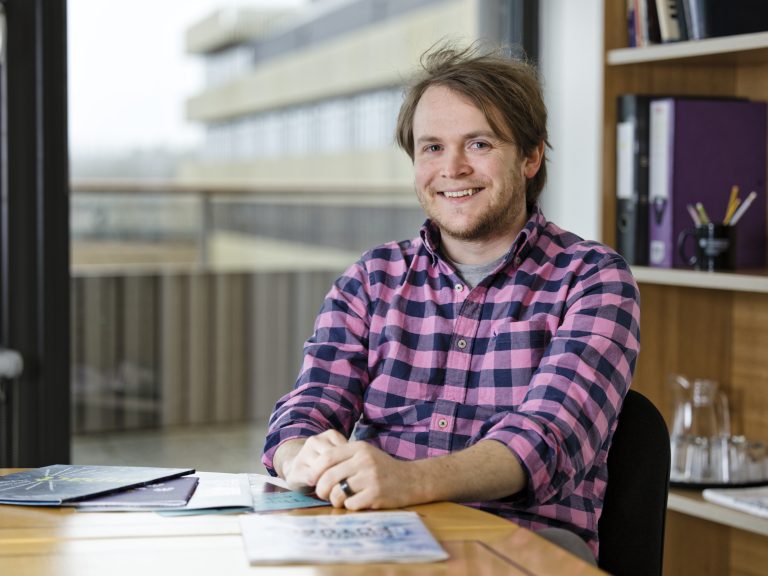
A woman sits at a table looking towards the camera

Reader in Molecular Biotechnology
Head of Molecular Neuroscience Group

Post-doctoral researchers

A portrait of a woman

Biography

I am a Research Associate in Biophotonics in the Laser Analytics Group headed by Prof Clemens Kaminski, working on developing and using optical microscopy tools for brain organoid imaging and other biomedical applications.

Previously in the Photonics Group at Imperial College London, I worked on the development and application of dual-view oblique plane microscopy (dOPM), a single-objective light-sheet fluorescence microscopy technique, for cleared tissue imaging and heterogenous 3D cancer spheroid models. My PhD work in the lab of Prof Chris Dunsby work was focused on remote-refocusing light-sheet fluorescence microscopy, applied to high-speed volumetric imaging of calcium dynamics in cardiomyocytes.

Prior to that, I completed a BSc in Physics, followed by a MSc in Optics and Photonics and MRes in Chemical Biology at Imperial College London. My research interests are focused on the development and application of novel optical instrumentation concepts for fast, high-resolution 3D biomedical imaging.

A portrait of a man looking towards the camera

Nino is a postdoctoral research associate in the Molecular Neuroscience Group of Gabriele Kaminski Schierle, the partner group of the Laser Analytics Group.

He’s involved in a variety of projects surrounding different technologies, such as microelectrode arrays, microfluidics, or fluorescence lifetime microscopy, as well as various biological models. However, his primary work currently centres on studying the impact of disease-causing proteins, as present in Alzheimer’s, Parkinson’s, or ALS, through C. elegans nematodes to enable the development of novel pharmaceutical interventions.

Biography

Nino received a B.Sc. and M.Sc. in mechanical engineering from ETH Zurich, Switzerland, before proceeding with a D.Sc. in acoustofluidics. He moved to Cambridge in 2021 after having been awarded a career fellowship by the Swiss National Science Foundation to study the causes of neurodegenerative diseases through small model organisms. Following his fellowship, he joined the Molecular Neuroscience Group as a postdoctoral research associate.

Anne-Pia did her PhD in the Laser Analytics Group and is now back for an EPSRC PDP Fellowship.

She focuses on the molecular mechanisms of cold adaptations (looking at cells derived from Antarctic fish), and the development of imaging methods to do so.

Anne-Pia originally did an interdisciplinary Bachelor’s degree in Paris, followed by a Master’s in Sustainability and one in Biophysics, before joining the Sensors CDT and finally LAG. She is generally interested in interdisciplinary approaches to understand life in its beautiful complexity.

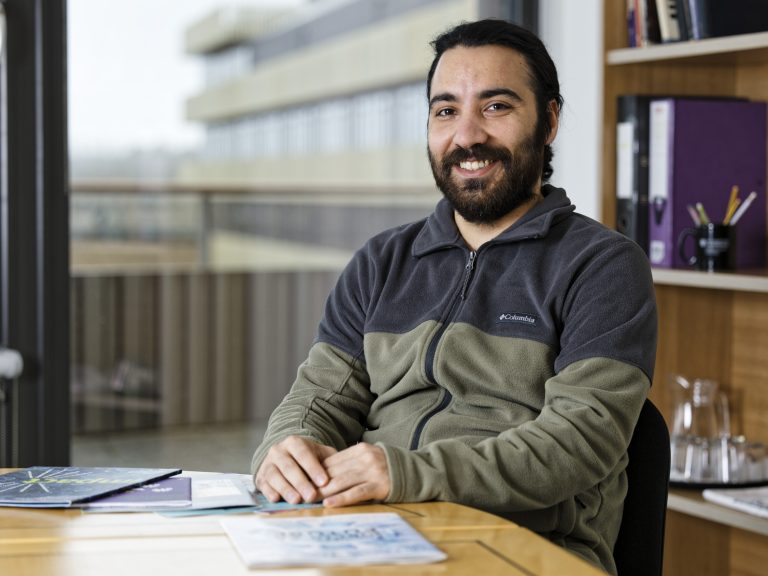
Amir is a PDRA in the Department of Chemical Engineering and Biotechnology (CEB) at the University of Cambridge, working in close collaboration with the British Antarctic Survey (BAS). His research focuses on developing advanced tools for live-cell super-resolution imaging of biological dynamics at sub-zero temperatures.

He is jointly supervised by Prof. Clemens Kaminski (CEB) and Prof. Melody Clark (BAS).

Biography

Amir holds a PhD in Physics, where he developed a single-molecule imaging flow cytometry system to quantify individual molecules on cell membrane. His doctoral research was supported by the EPSRC Doctoral Training Partnership Studentship.

Before undertaking his PhD, Amir gained hands-on experience in super-resolution microscopy at leading research institutions, including the European Molecular Biology Laboratory (EMBL) in Heidelberg and the Institute of Photonic Sciences (ICFO) in Barcelona.

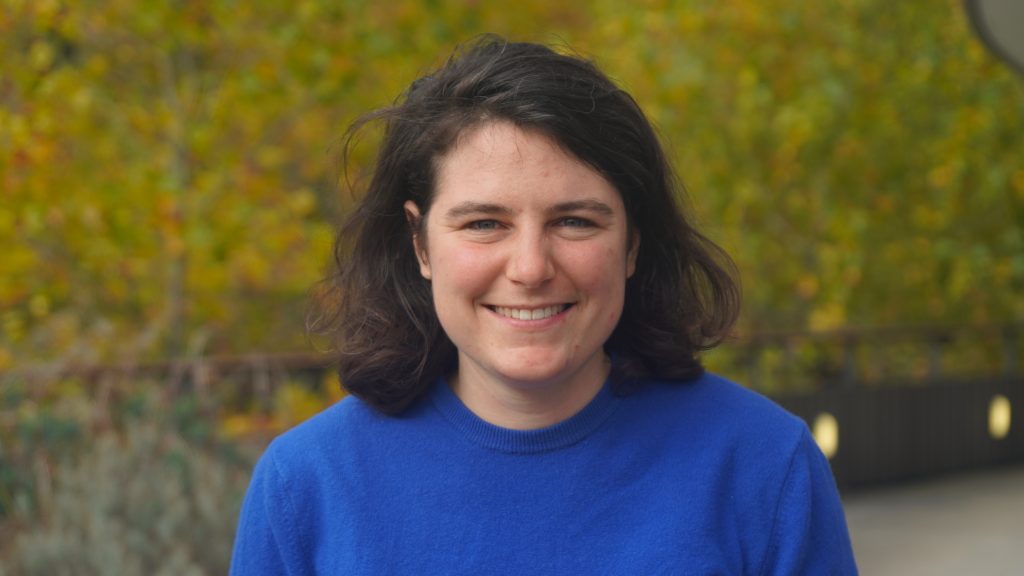
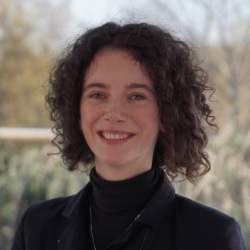
A portrait of a young woman smiling towards the camera

Francesca van Tartwijk is interested in the organisation of cells at the micron scale, for instance into organelles, and how it emerges from physical principles.

She researches how this organisation is altered in specialised cell types such as neurons, how it is adapted to changed local environments (such as in organisms that live in ‘extreme’ habitats), and how it is compromised in the context of disease (such as neurological disorders). To investigate these questions, she uses a range of cutting-edge fluorescence microscopy techniques as well as unique biological model systems.

Her current work focuses on subcellular and molecular mechanisms of cold adaptation in the Antarctic fish Harpagifer antarcticus.

Biography

Francesca is currently appointed as a Molecular Biologist at the British Antarctic Survey and as a Visiting Researcher at the Laser Analytics Group of the University of Cambridge.

She obtained her PhD from the University of Cambridge (working in the Laser Analytics Group), focusing on the role of the RNA-binding protein FUS in axonal organisation and disease. She previously received a BA and MSci in Natural Sciences from the University of Cambridge, and an MRes in Sensor Technologies and Applications as part of the EPSRC Sensor CDT programme at the University of Cambridge.

She is also a Postdoctoral Research Associate at Queens’ College, Cambridge.

Assistant Research Professor

PhD in Chemistry from Durham University

MSci Joint honours in Biology and Physics from Durham University

Postdoctoral research associate

PhD students

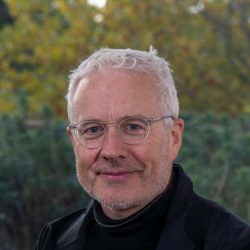
A portrait of a man with glasses smiling towards the camera

I’m a PhD student working on a robotic platform for the high-throughput production, screening and optimisation of synthetic cells and complex biomimetic formulations.  The platform combines automated liquid handling, temperature control, optical microscopy, and AI-assisted image classification.

Biography:

I am a mature student who transitioned back to academia a few years ago. I have held senior technology and management roles in a number of global companies including Accenture, EMI Music, the BBC and Macmillan Publishing.

My first degree was in Physics at Imperial College, London.  I also have an MA in design from the Royal College of Art, and a MRes in Sensor Technologies and Applications from Cambridge.  

PhD student, Laser Analytics group

I am a PhD student in the Laser Analytics Group with a background in opto-electronic information science and engineering.

My current research aims to develop an intelligent microscopy that can achieve high-resolution imaging with high efficiency, which would be a powerful technique for revealing drug mechanisms of action.

Anmin graduated from Imperial College London in 2024 with an integrated MEng in Biomedical Engineering. In October 2024, he joined the Photonic and Electronic Systems CDT to pursue an MRes in photonics, focusing on biophotonics for medical imaging applications.

In October 2025, he joined the Laser Analytics Group as a PhD student.

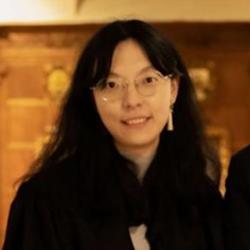
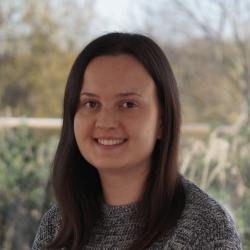
A portrait of a woman looking at the camera

I am a PhD student funded by the Connected Electronic and Photonics Systems CDT. My work focuses on the development of a “SIMple” microscope: an optical structured illumination microscopy system to make super-resolution imaging lower-cost and more easily accessible to bioscience researchers.

Laser Analytics Group