Driven by curiosity. Driving change
New preprint explores Antarctic fish cell biology
We are excited to share that our new preprint on primary cell culture from Antarctic fish has been published.
It is now available on bioRxiv: https://www.biorxiv.org/content/10.64898/2026.04.24.720652v1.abstract
Antarctic fish are cold-blooded animals that live year-round at temperatures between -2 and 2 °C. Such extreme conditions present major challenges for cellular function, raising the question of how these species have adapted to survive and thrive in one of the coldest environments on Earth.
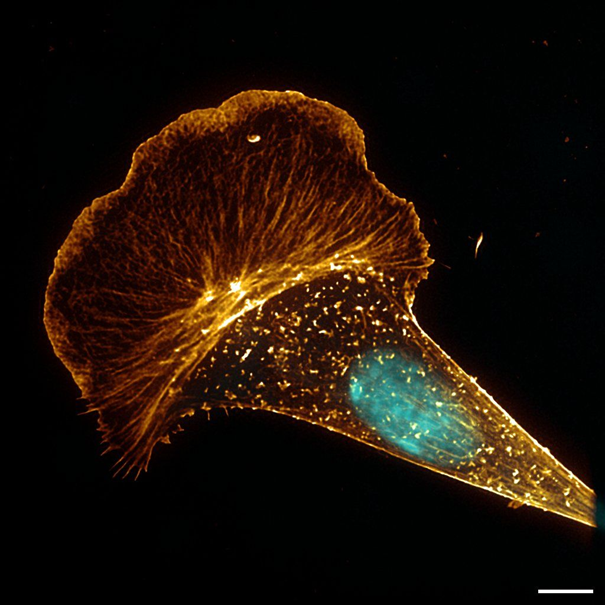
To investigate this, we established the first cell cultures from Antarctic fish species. By growing Antarctic fish cells on glass in a controlled environment, we were able to apply live-cell super-resolution microscopy to study their intracellular organisation in unprecedented detail. Our findings show that subcellular organisation is broadly similar to that of a comparator fish species from a warmer habitat, but with several notable differences, including distinct mitochondrial structures.
This new model system opens up exciting opportunities to investigate how Antarctic cells cope with cold-associated stresses, such as impaired protein folding. Understanding these adaptations could provide insights relevant to biotechnology and biomedicine, as similar cellular stresses also occur in human disease.
This work has been, and continues to be, a fantastic cross-disciplinary collaboration between the British Antarctic Survey and the University of Cambridge Department of Chemical Engineering and Biotechnology. The study includes contributions from Francesca van Tartwijk, Anne-Pia Marty, Amir Rahmani, Yuetong Jia, Edward Ward, Isa Hussain, Lloyd Peck, Clemens Kaminski and Melody Clark.
We look forward to discussing this work with the wider research community.