
 Driven by curiosity. Driving change
OBITUARY
In memory of Dr Ronald Midgley Nedderman
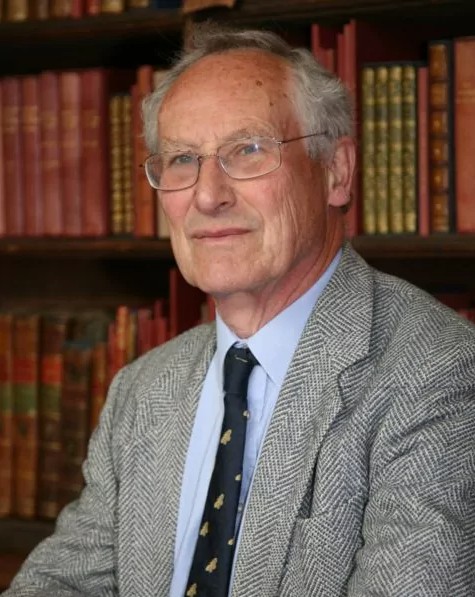
by Professor John Dennis, with contribution from Allan Hayhurst, Roland Clift and former colleagues at CEB
It is with deep sadness that we record the death of Ron Nedderman on 18th May, 2021.
Ron was educated at Leighton Park School and came up to Cambridge to read Engineering at St. John’s. Following a First in the Engineering Tripos, he moved to the Department of Chemical Engineering in Pembroke Street and undertook a PhD, completed in 1960, on annular, two-phase flow under the supervision of J. M. Kay and, later, Terence Fox. Jim Wilkes also supervised him when Fox became ill. Subsequently, he was appointed Demonstrator and then University Lecturer in the Department, becoming a Fellow of Darwin in 1964 and then of Trinity in 1981. He retired from the Department as a University Lecturer in 2000.
Ron had a supreme intellect and was quietly and profoundly accomplished in all activities he undertook, whether teaching, examining and research in the Department or in his outside interests in botany, ornithology or Scottish Country Dancing. He is fondly remembered for his humility, generosity, friendliness, integrity and compassion. He was passionate about teaching and examining and could lecture and supervise almost any part of the Tripos with great clarity and insight. His research on two-phase flow, and later in granular statics and dynamics, was seminal and influenced profoundly the development of those important fields in process engineering. His significant advances resulted both from his intellectual insight and from his familiarity with the fundamental principles of engineering, emanating from his great interest in teaching. He was a source of inspiration and incalculable assistance to generations of new Lecturers in the Department.
In writing this obituary, I have been overwhelmed with the heartfelt contributions from so many colleagues about this most unassuming of men. I have therefore deliberately reproduced these appreciations, below, because the freshness and immediacy of these thoughts transcends the desire to try to summarise these contributions into a standard obituary.
Above all else, Ron was motivated and concerned with the welfare and education of successive generations of students. It is therefore fitting to end this introduction by quoting the words of Jamie Cleaver, a former PhD student:
“Ron accepted me as his PhD student in 1987 and was an exemplary supervisor. He guided me with patience, encouraging me to ask questions, correcting my mistakes kindly, and praising my successes. As a result, my confidence grew as my research progressed. However, it was his quiet humility and his passion for teaching that has had the biggest impact on me. Reflecting back, this quiet, unassuming man demonstrated powerful integrity, compassion, and probity, coupled with a sense of humour that would frequently catch me off guard. I recall an occasion at the start of my PhD when he directed me to one of the department support staff, whom he described as ‘quiet, shy and retiring’. To my surprise, I found that quite the opposite was true. Other lasting memories include his generosity in sharing the surplus fruit and vegetables from his garden, his passion for Scotland and Scottish Country Dancing, and his encyclopaedic knowledge of ornithology. He was an inspiring role model and has been one of the biggest and most positive influences in my life.”
We have all been enriched in so many ways by having had Ron as one of our colleagues. Although we saw relatively little of him in his long and active retirement, we shall surely miss him as a friend and mentor.
→ Read the Trinity College tribute

"Ron was born in Todmorden on 7th July, 1935, in that very hilly country, where the only level field is the cricket pitch, through which the Lancashire -Yorkshire boundary passes. His family were part of the mill-owning set there. One of them made and sold Nedderman pumps for filtering the air in cotton mills. He was very much educated by aunts and grandmothers, hence his huge knowledge of botany. His mother, whom he admired, was top in Maths at the local elementary school, where Sir John Cockroft (Nobel laureate) was second. His father taught classics at Rochdale Grammar School. Ron went to Leighton Park, the Quaker school near Reading. He was much affected by Quakerism and had a collection of Quaker sayings, such as when he opposed somebody being allowed to do a job or join a committee, he would simply say “That is a name, which had not occurred to me”. That meant real opposition. "Ron went to St John’s to read engineering, without doing military service. That meant that he was two years younger than the others in his year. He became a close friend of Frank Goodyear, later the classics fellow at Queens’. They holidayed together in Greece and Italy more than once. These trips must have been very boozy, given Frank’s bibulous tendencies. "His research for his Ph.D. was supervised by Kay, who left and then Fox followed as supervisor. He worked on flooding in vertical annular gas-liquid flow. Subsequently, Fox appointed him a Demonstrator, indicating that Ron must have impressed Fox – a man not easily impressed. As was the custom then, he spent a year with Shell gaining industrial experience, which was to serve him well. "He married Susan Weller, daughter of the Bursar of Caius. She was a wonderful Scottish dancer - the best in Cambridge apparently. Their children were Jenny and Angus. They lived first in Great Shelford, later in Susan’s family home in Clarkson Road. He adored teaching and his knowledge of chemical engineering fundamentals was profound. He managed to cover nearly all the Tripos, and was lacking confidence only in chemical thermodynamics. He was very important and active when the Department started to teach a course for Part IB of the Natural Sciences Tripos. Lots of the experiments and examples sheets were his. I was one of many members of staff who benefitted from Ron’s freely and cheerfully given help, elucidating arcane bits of our course. That included providing his lecture notes. He also liked to write up his lecture notes as books and published four in total. He constantly kept an eye on what the Department taught, introducing many innovations over the years. "He became a Fellow of Darwin, and also served as an external director of studies at a number of other colleges at a time when few colleges had teaching fellows in chemical engineering. He was delighted to take a Fellowship at Trinity in 1981, when he won the Beilby prize, awarded by the SCI. Later he surprisingly enjoyed being a Tutor in Trinity; that involved Susan entertaining students. I suspect he was paid so well that he had no incentive to seek promotion. I did wonder if he had any ambition to be promoted, particularly when once I had to force him to co-author a paper with me. He could have published many more papers than he actually did. "He was interested in examining, was brilliant at it and was constantly thinking up new questions. Certainly, he taught me how to be Chairman of a Tripos and handle an External Examiner. "He was Secretary of the Department for many years, when Armstrong (in effect the HOD) ran the finance for years, without even an accounts clerk. Ron was in charge of the assistant staff and technicians. The two got on well. When I joined the staff in 1979, Ron was keen that I should take on the job. I suspect that he did not enjoy it and I acquiesced. He did not enjoy conflict. "He changed his research from working on two-phase flow to granular flow in the early 1970s, following encouragement from John Davidson and Peter Danckwerts, and from then on published seminal work on the statics and dynamics of granular materials. "For years, if you went into the Department at Pembroke Street on a Sunday morning, the place was filled with the sound of Scottish dancing. Susan was a key person in those complex circles, but Ron really enjoyed it and was interested in the dances’ structures. "Around the time that John Davidson retired, Susan’s health deteriorated, so that Ron retired to nurse her. Very sadly she died soon after that and Ron took on the life of a hermit looking after his vast garden. He had planned to write a book on grasses and also one on Scottish dances. I don’t know how they developed." (Comment from Patrick Barrie, Director of Education for the School of Technology and University Senior Lecturer : I believe Ron completed his book on “lady step” Scottish country dances – it is apparently published as two volumes, but is not in his name. He was modest and was happy not to receive recognition for it).
Emeritus Professor Allan Hayhurst
"I first met Dr Nedderman in 1962. I had the good fortune to have him as one of my supervisors for Part I of the Chemical Engineering Tripos and my sole supervisor for Part II. I clearly recall Part II supervisions (which were on Friday afternoons) as “ending the week on a high”. In addition to his insights into the kind of puzzle that was set as Part II exam questions, Ron introduced me to Mediaeval Icelandic literature; this was one of his passions, along with learning obscure/obsolete languages (such as Scots Gaelic), bird watching (for which he went every year to the Orkneys) and, of course, Scottish dancing. This meant that my Part II project, for which I was paired with Colin Pritchard, was carried out under Ron’s supervision. We worked on flooding points in vertical countercurrent gas/liquid flows. It led to a paper in Chem Eng Science, the first (of course) for Colin and me. Clift, Pritchard & Nedderman (1966) remains a timeless classic! "I next engaged with Ron when I was a lecturer at Cambridge from 1976 to 1981. It was regarded as commonplace for staff to attend each other’s lectures (we were expected to provide supervisions on the material, after all) so I attended Ron’s on granular materials and the method of characteristics – two subjects that can be notoriously perplexing. His ability to bring clarity to complex topics again made these lectures something to look forward to. It took a lot of persuasion, from many people, for him to turn his clear grasp of granular materials into a book, although that finally happened in 2005. "Ron had been a Fellow at several Colleges which he described to me as “unsatisfactory” but, after I left Cambridge in 1981, he became a Fellow of Trinity College (where I had been a Fellow and John Davidson was a prominent figure – Vice-Master for a while). Ron then immersed himself more in the College and became a Tutor. "I suppose the picture this conjures is of Ron as a Cambridge eccentric, but that wouldn’t really capture the man. I think he had decided that his world would be defined by the statutory “Within 10 miles of Great Saint Mary’s Church” and wanted to be significant on his own terms within that world, without much interest in what happened outside it. He succeeded on those terms, but I think you needed to “experience” him at first hand to know what a remarkably clear intellect he had, and also what a very nice man he was."
Roland Clift