
 Driven by curiosity. Driving change
Spinouts
Some ideas developed within the Department become more than research projects. Through collaboration, entrepreneurship and investment, they become companies developing technologies that address challenges in sustainability, healthcare, advanced materials and manufacturing.
Our spinouts demonstrate one of the many ways research creates impact beyond academia. They reflect the variety of research taking place across CEB and show how discoveries in chemical engineering and biotechnology can be translated into products, services and technologies with real-world applications.
Examples of our spinouts
Advanced materials | Energy systems
Immaterial
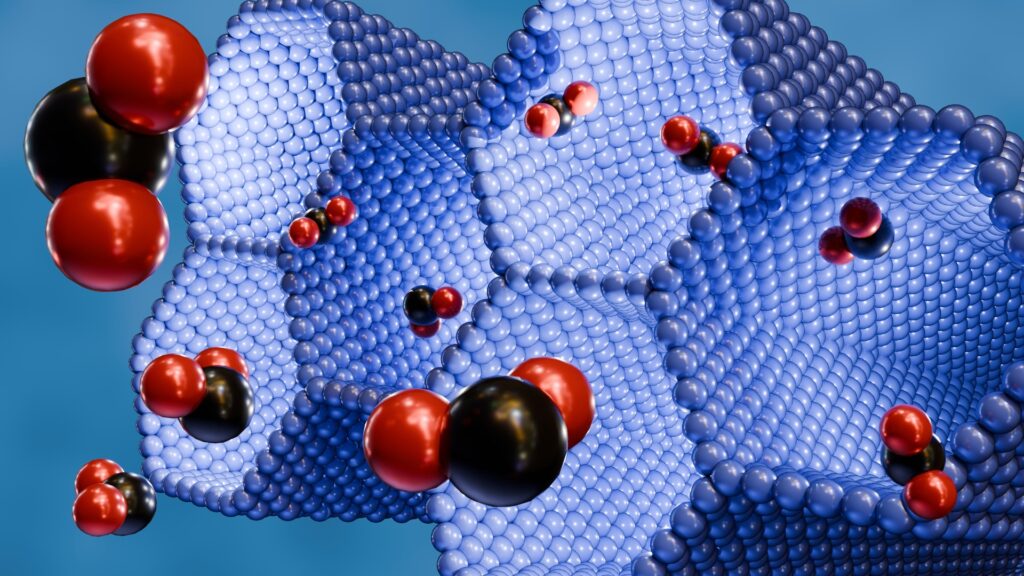
Developing advanced porous structures in metal-organic frameworks (MOFs), for applications from carbon capture to industrial separation technologies.
Industrial processing
Colorifix
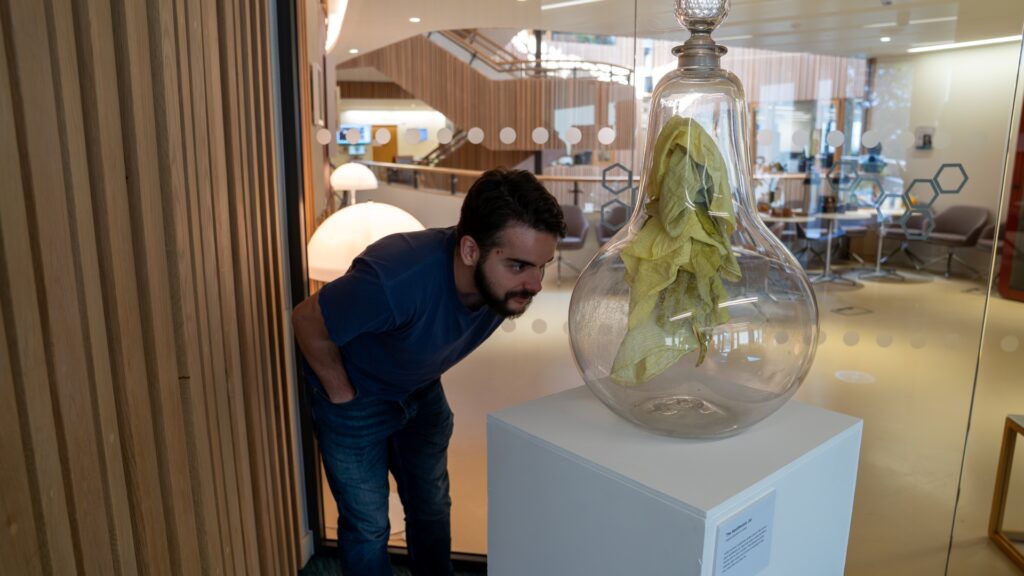
Colorifix uses synthetic biology to develop a more sustainable textile dyeing process, reducing the materials traditionally required in manufacturing.
Imaging science | Biomedical engineering
Clarity Sensors
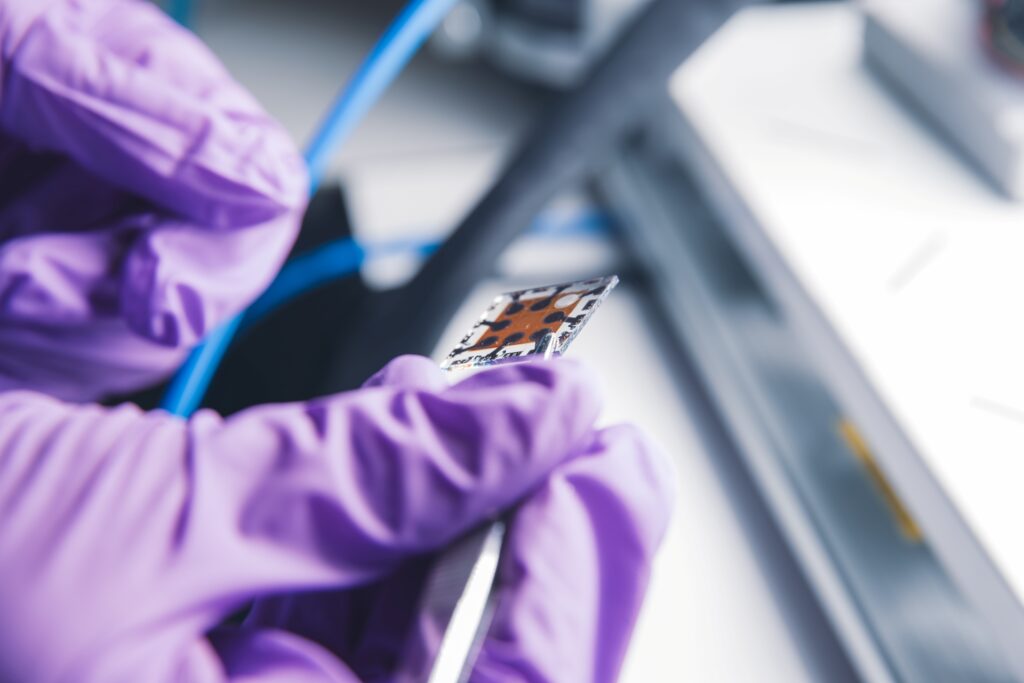
Develops next-generation X-ray detectors using semiconductor materials, enabling higher-resolution imaging with lower radiation doses.
The curious story of a spinout
Spinouts often begin with fundamental research and years of exploration. The journey from a scientific discovery to a commercial technology can take many years, as researchers develop new understanding and find ways to apply it beyond the laboratory.
An unexpected discovery combines with curiosity
The lab was quiet.
A postgraduate student hung a white lab coat on their shoulders, tugged on a pair of purple gloves distractedly and wandered over to yesterday’s experiment. Another day, another set of results. With any luck, this one would finally go right. There were easier things to think about anyway – the chapter that still needed writing, whether there was any milk left at home, and how on earth they were going to make the flat presentable before their parents arrived at the weekend.
Then they stopped.
That wasn’t right.
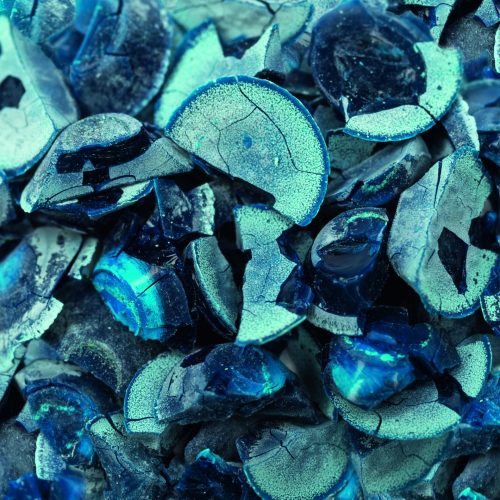
The material sitting in front of them wasn’t what they had been trying to make. What they saw was a transparent, crystalline material unlike anything they had expected. It caught the light almost like a piece of glass. It was unusual enough to immediately make them stop thinking about how much milk was in the fridge. And beautiful enough to make them look twice.
They picked it up and went to find Professor David Fairen-Jimenez.
That unexpected result sparked a new direction of research that would eventually lead to the creation of spinout company Immaterial.
Metal-organic frameworks, or MOFs, were still an emerging area of materials science. But Professor Fairen-Jimenez recognised their potential early on and his Adsorption and Advanced Materials group went on to help shape the field, developing new ways to design, understand and engineer these remarkable porous materials for practical use.
Over the following years, David’s lab helped move MOFs from an exciting area of academic research towards practical engineering. By combining experimental science with computational modelling and machine learning, the team advanced new ways to identify, design, densify and engineer these remarkable porous materials, before tackling one of the field’s biggest challenges – how to shape them into forms that could actually be used outside the laboratory.
That work became the foundation of Immaterial, established in 2015 to turn years of research into technologies for carbon capture, hydrogen storage, clean air and other energy transition applications. Today, the company develops monolithic MOFs and the engineering systems that allow them to work in real industrial environments.
The company expanded, in 2026, to open a pilot manufacturing facility in Sawston, south of Cambridge.
The facility marked a milestone in translating advanced materials research into industrial production, enabling the company to manufacture its proprietary metal-organic frameworks (MOFs) at scale for customers worldwide.
More spinouts from the Department
Accelerated Materials
Developing advancements in how materials are developed, scaled, and commercialised.
Biotechspert
Connecting organisations with scientific and clinical experts through an AI-powered expertise discovery platform.
Cellcraft Ltd
Developing AI-driven biomanufacturing technologies to improve the production of food, medicines and sustainable materials.
Coherence
Developing optical neurotechnology to improve the understanding and treatment of neurological disorders.
360Me
Developing digital technologies to improve wellbeing, resilience and personal development in healthcare.
ElectraBio
Developing bioelectronic organ-on-chip technologies to improve drug discovery and biomedical research.
ReactWise
Using artificial intelligence to accelerate chemical process development and pharmaceutical manufacturing.
Senesys.Bio
Developing biotechnology to improve the understanding and measurement of cellular ageing.
Simprints
Developing biometric identification technology to strengthen healthcare delivery in low-resource settings.
Swift Solar
Developing next-generation solar technologies using advanced materials for clean energy generation.
Syrona Health
Developing digital health tools to improve diagnosis, treatment and support across women’s healthcare.
Vector Bioscience
Developing drug delivery technologies based on next-generation metal-organic framework (MOF) materials.