
 Driven by curiosity. Driving change
Two CEB researchers awarded inaugural green fellowships
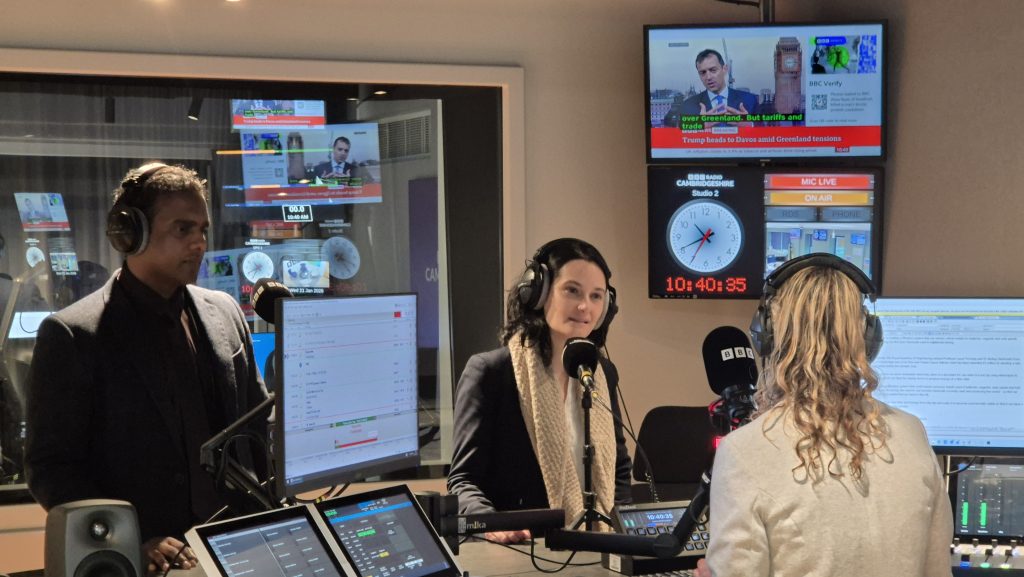
Two of the thirteen inaugural Green Future Fellowships from the Royal Academy of Engineering have been awarded to researchers at the Department of Chemical Engineering and Biotechnology (CEB).
The fellowships have been awarded to CEB’s Professor Laura Torrente Murciano and Dr Akshay Deshmukh, recognising the department’s growing role in engineering sustainability and future clean energy systems. The two awards mean CEB has secured the university’s only successes in the first-ever round.
Both fellowships support long-term research that can move beyond early-stage discovery and towards real-world deployment, with each award offering up to £3 million in funding over ten years.
Laura described the final stage of the selection process as demanding, with a full day at the Royal Academy of Engineering in which shortlisted candidates presented their proposals not only to the panel but in front of one another. The format, she said, was unusual and intense, with a clear focus on demonstrating how the work could scale beyond the lab and into wider use.
Akshay, who will join CEB next year with a new research group, completed his final interview remotely from the United States due to visa constraints.
The Green Future Fellowships are backed by a £150 million long-term investment from the Department for Science, Innovation and Technology to support engineering solutions to the climate crisis.
The fellowship will support the next phase of Laura’s work, centred on green ammonia as a carbon-free energy vector and as a practical way to store and transport renewable energy. She leads the Catalysis and Process Integration Group at CEB, where the aim is to take research from the lab and scale it up for industrial use.
“There’s some funding available for high TRLs (Technology Readiness Levels) and for low, but there’s a gap in the middle. This fellowship is one of the few that sits in that area,” Laura said. “Ammonia is a key molecule for our society. Since we discovered how to produce it at the beginning of the 20th century, it has provided the nitrogen required for soils to increase food production, feeding about 50% of the population.
“However, its current production is fossil fuel-driven, producing about 2% of global carbon dioxide emissions. Green ammonia production will not only decarbonise fertilisers, but it can also serve as a long-term energy storage molecule to be used directly as green fuel.”
Laura’s work focuses on developing alternative processes for the synthesis of green ammonia using renewable energy, hydrogen (from water) and nitrogen (from air).
“Renewable energy is intermittent, and this is the main challenge in the decarbonisation of chemical processes, conventionally designed and optimised to use fossil energy continuously,” she said. “So the question is how we design systems that work with intermittency rather than trying to erase it. For green molecules to be affordable, we need new processes rather than simply adapting the ones designed for fossil fuels”.
Her research has demonstrated that designing ammonia production plants to operate flexibly with intermittent wind and solar power is a key step to making green ammonia cost-effective. The work introduced the Levelised Cost of Renewable Energy Utilisation (LCOU) metric to evaluate how renewable variability affects cost, and provides a design framework for economically feasible ammonia systems.
Her team will now work to demonstrate novel ammonia synthesis processes suitable for flexible operation with renewable sources, as well as creating safe, scalable systems for storing ammonia once produced, tackling one of the main challenges associated with the use of green ammonia as an energy vector.
“This is an exciting opportunity to create impact, well aligned with our department’s vision of ‘driven by curiosity, driving change’, and I am thrilled,” said Laura.
Both fellowships are expected to begin in 2026, with Laura starting in August and Akshay taking up his award when he joins CEB early next year, under a structure designed to align with his UKRI Future Leadership Fellowship.
Alongside funding, the fellowship provides long-term support through training, mentorship and access to the Academy’s innovation network, giving researchers the time and stability needed to scale complex technologies.